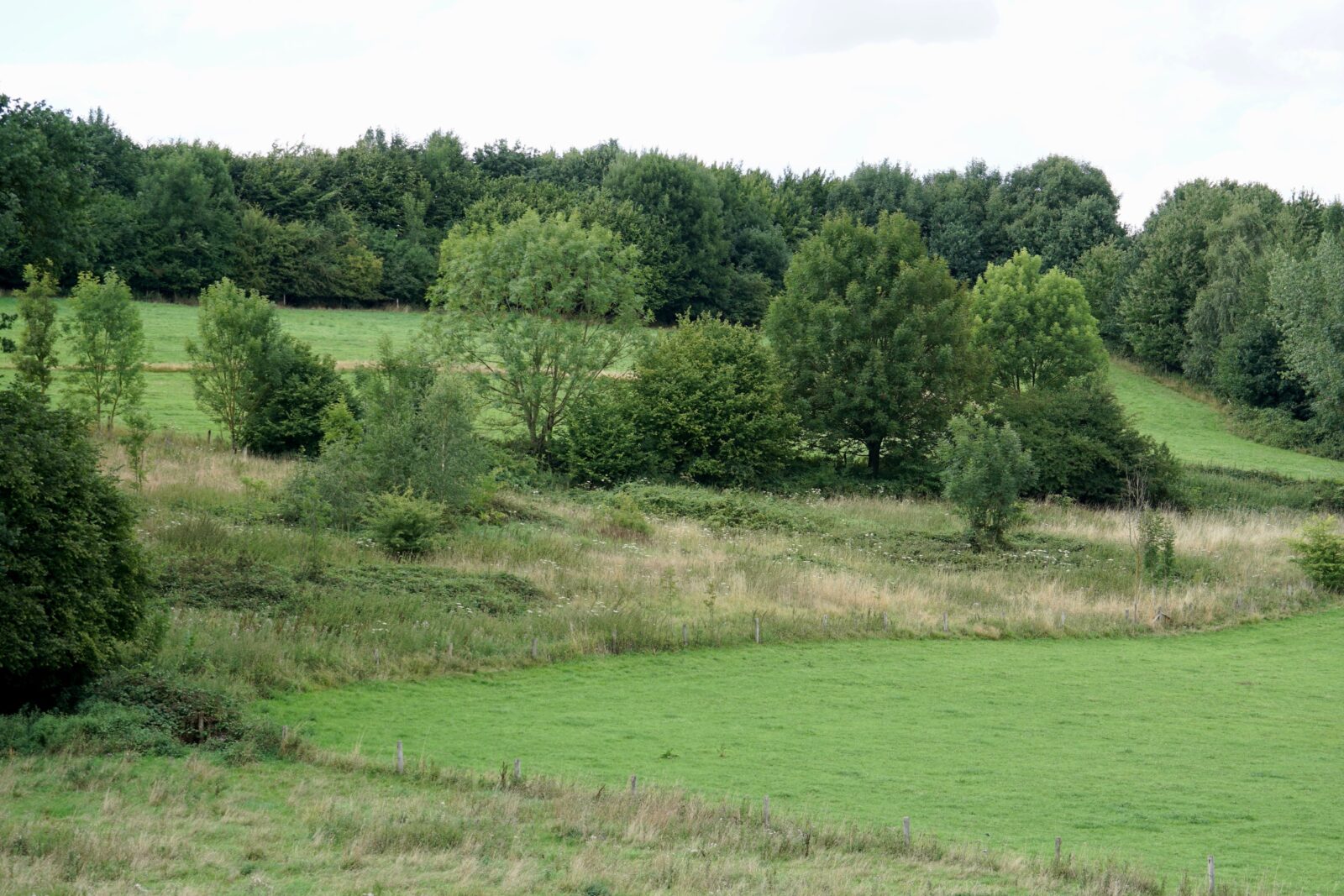
Grafts
Cuttings are steep slopes along contour lines. They divide a slope into terraces situated one above the other. Thanks to their stepped structure, the terraces are less steep, and rainwater runs off more slowly. Traditionally, the slopes or the upper edges of the slopes (Grafts) are covered with scrub hedges (often consisting of hawthorn, blackthorn, elder, dogwood, grey willow and blackberry). In the shrub hedges, provided they are wide enough, the water is given the chance to sink into the humus-rich soil. The width of the swaths is an important consideration in this regard.
The impact
Cesspools prevent runoff and erosion and help to retain moisture in the slope. The steeper the embankment or slope, the wider the cesspool should ideally be. A wider strip of vegetation provides more space for roots and vegetation to retain water and provide stability.
Restoring Grafts
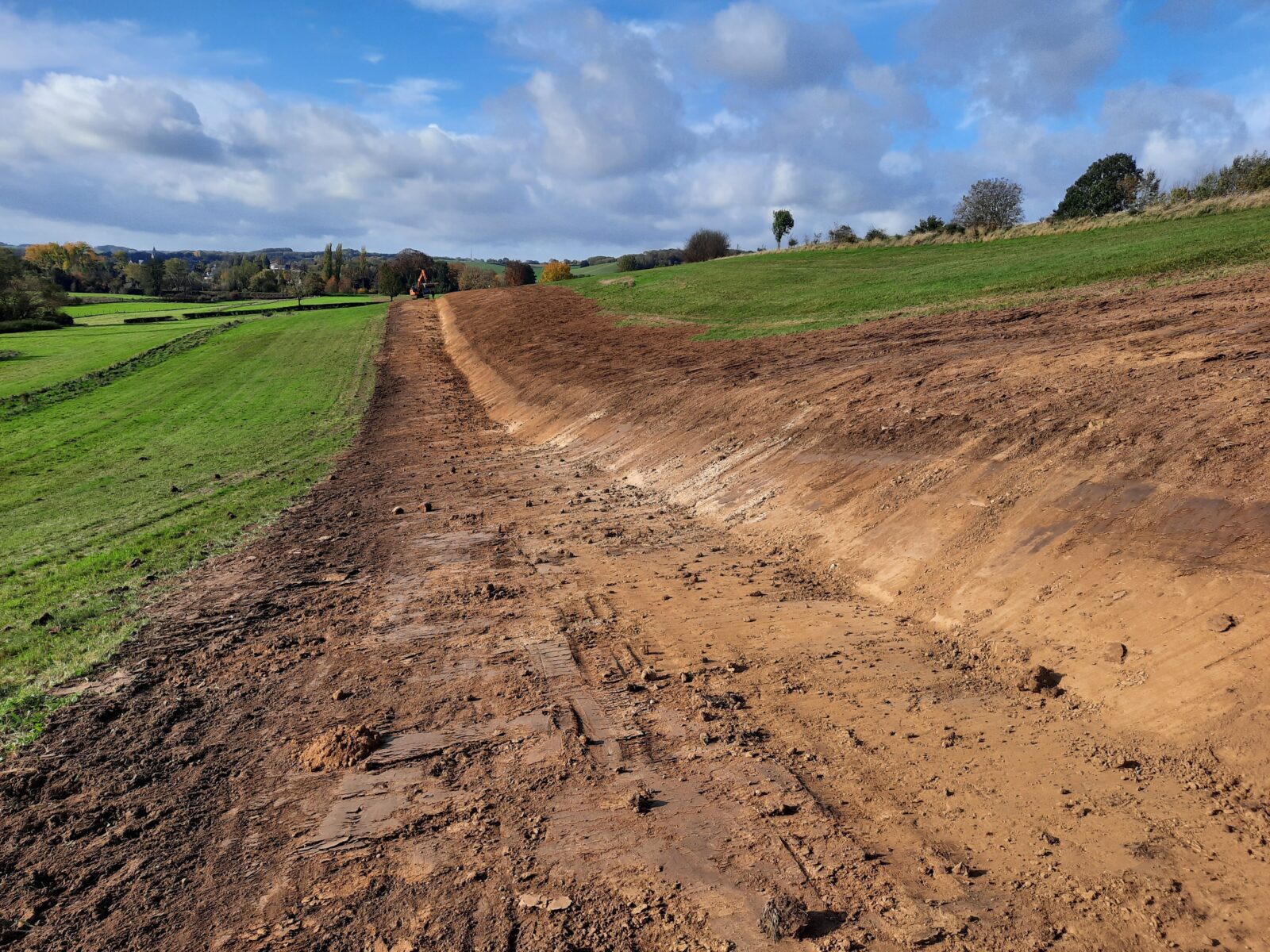
Many grafts have disappeared or been neglected over the years. Levelled grass strips can be restored through excavation work, and bare grass strips can be replanted.
Natural solutions

Developing natural grasslands

Developing natural forests

Food forest

Making space for beaver activity

Making room for natural floodplains

Making room for meandering

Raising the stream bed

Lowering banks

Removing drainage systems

Planting scrub hedges and copses

Standard orchard

Wide infiltration strip

Swales

Keylines

Converting (maize) fields on slopes into grassland or woodland

Wadi
